Associate Professor in Agriculture, Agriculture University, Kraków, Poland
2007-
PhD in Biology, Jagiellonian University, Kraków, Poland
2001-
M.Sc in Biology – Department of Plant Cytology and Embryology, Jagiellonian University, Krakow, Poland
EMPLOYMENT IN ACADEMIC INSTITUTIONS
2022-2024
Deputy Director for Scientific Research in The Franciszek Górski Institute of Plant Physiology of the Polish Academy of Sciences in Krakow
2020-present
Associate Professor, Department of Cell Biology in The Franciszek Górski Institute of Plant Physiology of the Polish Academy of Sciences in Krakow
2020-2020
Adiunct [Assistant Professor], Department of Plant Cytology and Embryology, Jagiellonian University, Krakow
2015-2019
Associate Professor, Department of Cell Biology in The Franciszek Górski Institute of Plant Physiology of the Polish Academy of Sciences in Krakow
2007-2015
Adiunct[Assistant Professor], Department of Cell Biology in The Franciszek Górski Institute of Plant Physiology of the Polish Academy of Sciences in Krakow
2001-2007
PhD student, Department of Cell Biology in The Franciszek Górski Institute of Plant Physiology of the Polish Academy of Sciences in Krakow
2001-2007
Interdisciplinary Ph.D. Study in the Faculty of Biology and Earth Sciences, Jagiellonian University
MEMBERSHIP AND FUNCTIONS
2022-now
Deputy Director for Scientific Research in The Franciszek Górski Institute of Plant Physiology of the Polish Academy of Sciences in Krakow
2020-now
Member of the Scientific Council in The Franciszek Górski Institute of Plant Physiology of the Polish Academy of Sciences in Krakow
2019-2020
Member of the Scientific Council of the Faculty of Biology of the Jagiellonian University in Krakow
2015-2019
Member of the Scientific Council in The Franciszek Górski Institute of Plant Physiology of the Polish Academy of Sciences in Krakow
2014-2017
Polish deputy in Management Committee of COST FA1306 ‘The quest for tolerant varieties: 'Phenotyping at plant and cellular level’
2014
External expert evaluator of the international research projects Fund for Scientific Research – FNRS; Slovak Research and Development Agency; Czech National Agency
2011-2013
Polish deputy in Management Committee of COST FA (Food and Agriculture) 0903 ‘Harnessing Plant Reproduction for Crop Improvement’
RESEARCH AREAS
Cell biology (cytoskeleton, cell cycle, auxin and abscisic acid signaling, plasma membrane fluidity, cell death) in responses to abiotic and biotic stress.
Effect of stress on plant’s responses in gene and protein levels, transgenesis, plant-growth regulators, in vitro tissue culture of cereals and Brassicaceae.
Pathogenesis - cytological and physiological analyses of the infection processes.
PRACTICAL SKILLS
In vitro culture: oil-seed rape microspore culture, cereal anther and microspore cultures, immature embryo culture.
Tracing of molecules in plant material: analysis of alfa-tubulin, actin, auxin, and auxin efflux carrier proteins localization by immunocytochemistry, fluorescent and confocal laser scanning microscopy (CLSM).
Modeling of cellular processes: Graphical Visualization of Cellular Processes in Image Pro-Premier
Tracing of the fungal infection process in plant material by cytology and microscopy.
Protein analyses: immunolocalisation of proteins in intact cells ('whole mount') and in sectioned material, protein isolation electrophoresis and western blotting.
Gene expression: RNA, DNA and pDNA isolation, PCR, qPCR, primer design.
Restriction analysis.
Bioinformatics: Sequence analysis, gene, and protein sequence alignment: BLAST.
Chromosomes analyses: karyotype analyses, C-banding of chromosomes.
Quantitative and qualitative analysis of ROS and antioxidative enzyme activity: fluorescence and fluorometric measurements.
Microspores/Androgenic embryos transformation with Agrobacterium tumefaciens.
RESEARCH EXPERIENCE
Post-doc projects.Post-doc projects. My postdoctoral projects focused on: (1) endogenous auxins as inducers of double haploid (DH) production in oilseed rape, (2) the role of polar auxin transport and auxin signalling in embryo development. Plant embryo development involves differential distribution (gradients) of the plant signalling molecule auxin. These gradients are established and maintained by a directional, intercellular auxin transport called polar auxin transport. Polar auxin transport provides positional and directional information for many aspects of embryo development. The B. napus microspore suspension is a suitable model system for such studies. Using a combination of genetic, molecular, physiological, and cell biological approaches, I aim to address the key question of how plant hormones play their respective roles in embryo development, with a particular focus on hormone interactions.
PhD project. My PhD project focused on early embryo development in in vitro microspore suspension cultures of Brassica napus. High yields of microspore-derived embryos (MDE) in suspension were reproducibly obtained using the method previously developed by the research team of Dr Jan Custers PRI Wageningen, The Netherlands. I have adopted this method and further optimised it in my laboratory. MDE develop and differentiate, in a manner similar to zygotic embryos in almost every aspect studied, so I used them to study the early stages of plant embryogenesis. The main aim of these studies was to study the development of androgenic embryos from the earliest stages (a single cell), including suspensor formation. The study of these structures during zygotic development is very difficult due to the ovarian tissues surrounding the embryos. I focused on the establishment of embryo polarity and the role of the cytoskeleton during MDE differentiation, also tracking the positions of mitochondria and amyloplasts, vacuolization patterns, cell wall formation, and differentiation of embryonic organs. My studies required the optimisation of many methods and the development of protocols for immunodetection and tracking of different structures in whole-mount (not sectioned) material.
PUBLICATIONS
Selected older papers (up to 2017) listed by year with links to the publishers' websites:
2015-2018
Golebiowska-Pikania G., Kopeć P., Surówka E., Janowiak F., Krzewska M., Dubas E., Nowicka A., Kasprzyk J., Ostrowska A., Malaga S., Hura T., Żur I. 2017. Changes in protein abundance and activity induced by drought during generative development of winter barley (Hordeum vulgare L.). Journal of Proteomics 169:73-86, doi: 10.1016/j.jprot.2017.07.016 Strona wydawcy
Golebiowska-Pikania G., Kopeć P., Surówka E., Krzewska M., Dubas E., Nowicka A., Rapacz M., Wójcik-Jagła M., Malaga S., Żur I. 2017. Changes in protein abundance and activity involved in freezing tolerance acquisition in winter barley (Hordeum vulgare L.). Journal of Proteomics 169:58-72, doi: 10.1016/j.jprot.2017.08.019 Strona wydawcy
Krzewska M., Gołębiowska-Pikania G., Dubas E., Gawin M., Żur I. 2017. Identification of proteins related to microspore embryogenesis responsiveness in winter triticale (×Triticosecale Wittm.). Euphytica 213:192. doi: 10.1007/s10681-017-1978-1 Strona wydawcy
Śniegowska-Świerk K., Dubas E. & Rapacz M. 2016. Actin microfilaments are involved in the regulation of HVA1 transcript accumulation in drought-treated barley leaves. Journal of Plant Physiology, 193, 22-25. Strona wydawcy
Wędzony M., Żur I., Krzewska M., Dubas E., Szechyńska-Hebda M., Wąsek I. 2015. Doubled haploids in triticale. Eudes F. (ed.), Triticale, Springer, pp.111-128. Strona wydawcy
Krzewska M., Czyczyło-Mysza I., Dubas E., Gołębiowska-Pikania G., Żur I. 2015. Identification of QTLs associated with albino plant formation and some new facts concerning green versus albino ratio determinants in triticale (×Triticosecale Wittm.) anther culture. Euphytica, 1-16. doi: 10.1007/s10681-015-1509-x Strona wydawcy
Żur I., Dubas E., Krzewska M., Waligórski P., Dziurka M., Janowiak F. 2015. Hormonal requirements for effective induction of microspore embryogenesis in triticale (×Triticosecale Wittm.) anther cultures. Plant Cell Rep. 34(1):47-62. Strona wydawcy
Żur I., Dubas E., Krzewska M., Janowiak F. 2015. Current insights into hormonal regulation of microspore embryogenesis. Frontiers in Plant Science 6 doi:10.3389/fpls.2015.00424 Strona wydawcy
Żur I., Dubas E., Krzewska M., Waligórski P., Dziurka M., Janowiak F. 2015. Hormonal requirements for effective induction of microspore embryogenesis in triticale (× Triticosecale Wittm.) anther cultures. Plant Cell Reports, 34:47-62, doi:10.1007/s00299-014-1686-4 Strona wydawcy
Dubas E., Moravčíková J., Libantová J., Matušíková I., Benkova E., Żur I., Krzewska M. 2014. The influence of heat stress on auxin distribution in transgenic B. napus microspores and microspore derived embryos. Protoplasma 251:1077-1087. IF2013 3.171 Read more
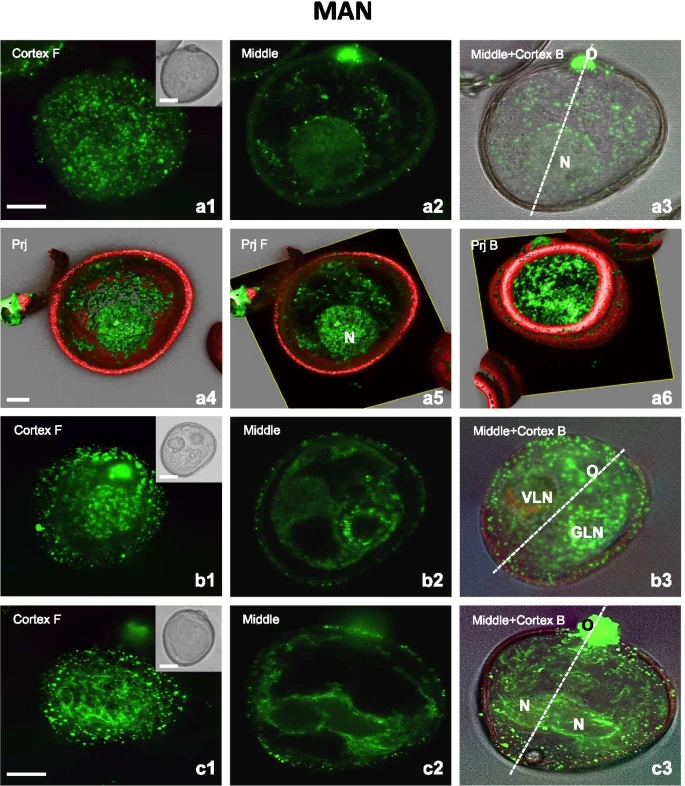
Dubas E., Custers J., Kieft H., Wędzony M., van Lammeren A.A.M. 2014. Characterization of polarity development through 2- and 3-D imaging during the initial phase of microspore embryogenesis in Brassica napus L. Protoplasma 251: 103-113. IF2013 3.171 Read more
Wędzony M., Szechyńska-Hebda M., Żur I., Dubas E., Krzewska M. 2014. Tissue culture and regeneration: a prerequisite for alien gene transfer. In: Alien Gene Transfer in Crop Plants, Vol. 1. Innovations, Methods and Risk Assessment. Pratap A., Kumar, J. (Eds.), Springer, ISBN 978-1-4614-8584-1 Read more
Żur I., Dubas E., Krzewska M., Janowiak F., Hura K., Pociecha E., Bączek-Kwinta R., Płażek A. 2014. Antioxidant activity and ROS tolerance in triticale (×Triticosecale Wittm.) anthers affect the efficiency of microspore embryogenesis. Plant Cell, Tissue and Organ Culture (PCTOC). DOI: 10.1007/s11240-014-0515. IF2013: 2.61 Read more
Żur I.,.Dubas E*., Krzewska M., Sánchez-Díaz R.A., Castillo A.M., Vallés M.P. 2014. Changes in gene expression patterns associated with microspore embryogenesis in hexaploid triticale (× Triticosecale Wittm.)", submitted to Plant Cell, Tissue and Organ Culture (PCTOC) 116(2):261-267. IF2013 2.612 Read more
Żur I.,.Dubas E., Krzewska M., Waligórski P., Dziurka M., Janowiak F. 2014. Hormonal requirements for effective induction of microspore embryogenesis in triticale (×Triticosecale Wittm.) anther cultures. Plant Cell Rep DOI 10.1007/s00299-014-1686-4. MNiSW 35 pkt., IF2013 2,936 Strona wydawcy
Dubas E., Janowiak F., Krzewska M., Hura T., Żur I. 2013. Endogenous ABA concentration and cytoplasmic membrane fluidity in microspores of oilseed rape (Brassica napus L.) genotypes differing in responsiveness to androgenesis induction. Plant Cell Rep 32:1465–1475. IF2013 2.936 Read more
Pociecha E., Janowiak F., Dubas E., Żur I., Tokarz K., Kolasińska I., Płażek A. 2013. Progress of snow mould infection in crowns of winter rye (Secale cereale L.) is related to photosynthetic activity during cold acclimation. Plant Physiology and Biochemistry 70:360-367. IF2013: 2.352 Read more
Żur I., Gołębiowska G., Dubas E., Golemiec E., Matušíková I., Libantová J., Moravčíková J. 2013. β-1,3-glucanase and chitinase activities in winter triticales during cold hardening and subsequent infection by Microdochium nivale. Biologia 68/2: 241-248. IF2013: 0.696 Read more
Żur I., Dubas E., Słomka A., Dubert F., Kuta E., Płażek A. 2013. Failure of androgenesis in Miscanthus×giganteus in vitro culture of cytologically unbalanced microspores. Plant Reproduction 26(3):297-307. IF2012: 2.07 Read more
Dubas E., Wędzony M., Custers J., Kieft H., van Lammeren A.A.M. 2012. Gametophytic development of Brassica napus pollen in vitro enables examination of cytoskeleton and nuclear movements. Protoplasma 249(2): 369-377. IF2013: 3.171 Read more
Krzewska M., Czyczyło-Mysza I., Dubas E., Gołębiowska-Pikania G., Golemiec E., Stojałowski S., Chrupek M., Żur I. 2012. Quantitative trait loci associated with androgenic responsiveness in triticale (×Triticosecale Wittm.) anther culture. Plant Cell Reports 31:2099–2108. Plant Cell Reports 31:2099–2108. IF2013: 2.936 Read more
Słomka A., Kuta E., Płażek A., Dubert F., Żur I., Dubas E., Kopeć P., Żurek G. 2012. Sterility of Miscanthus×giganteus results from hybrid incompatibility. Acta Biologica Cracoviensia Series Botanica 54/1: 1–8. IF2013: 0.662 Read more
Żur I., Krzewska M., Dubas E., Gołębiowska-Pikania G., Janowiak F., Stojałowski S. 2012. Molecular mapping of loci associated with abscisic acid accumulation in triticale (×Triticosecale Wittm.) anthers in response to low temperature stress inducing androgenic development. Plant Growth Regulation 68(3): 483-492. IF2013: 1.625 Read more
Dubas E., Custers J.B.M., Kieft H., Wędzony M., van Lammeren A.A.M. 2011. Microtubule configurations and nuclear DNA synthesis in microspore derived embryos of Brassica napus cv Topas that mimic zygotic embryo development. Plant Cell Reports 30: 2105–2116. IF2013 : 2.936 Read more
Dubas E., Golebiowska G., Zur I., Wedzony M. 2011. Microdochium nivale (Fr., Samuels & Hallett): cytological analysis of the infection process in triticale (x Triticosecale Wittm.). Acta Physiologiae Plantarum 33(2): 529-537. IF2013: 1.524 Read more
Żur I.A., Dubas E., Pociecha E., Dubert F., Kolasińska I., Płażek A. 2011. Cytological analysis of infection process and the first defence responses induced in winter rye (Secale cereale L.) seedlings inoculated with Microdochium nivale. Physiological and Molecular Plant Pathology 76: 189-196. IF2013: 1.987 Read more
Szechyńska-Hebda M., Wędzony M., Tyrka M., Gołębiowska G., Chrupek M., Czyczyło-Mysza I., Dubas E., Żur I., Golemiec E. 2011. Identifying QTL for cold-induced resistance to Microdochium nivale in winter triticale. Plant Genetic Resources: Characterization and utilization 9(2):296-299. IF2013: 1.057 Read more
Dubas E., Wędzony M., Petrovska B., Salaj J., Żur I. 2010. Cell structural reorganization during induction of androgenesis in isolated microspore cultures of triticale (x Triticosecale Wittm.). Acta Biologica Cracoviensia Series Botanica 52/1: 73–86. IF2013: 0.662 Read more
Dubas E., Marzec K., Płażek A. 2010. Cytological studies on Microdochium nivale infection in Lolium perenne (L.) plants. Zeszyty Problemowe Postępów Nauk Rolniczych PAN Zeszyt 545:389-401.
Żur I., Dubas E., Golemiec E., Szechyńska-Hebda M., Gołębiowska G., Wędzony M. 2009. Stress-related variation in antioxidative enzymes activity and cell metabolism efficiency associated with embryogenesis induction in isolated microspore culture of triticale (xTriticosecale Wittm.). Plant Cell Reports 28:1279–1287. IF2013: 2.36 Read more
Supena EDJ., Winarto B., Riksen T., Dubas E., van Lammeren A., Offringa R., Boutilier K., Custers J. 2008. Regeneration of zygotic-like microspore-derived embryos suggests an important role for the suspensor in early embryo patterning. Journal of Experimental Botany 59(4): 803-814. doi:10.1093/jxb/erm358.IF2013: 5.794 Read more
Żur I., Dubas E., Golemiec E., Szechyńska-Hebda M., Janowiak F., Wędzony M. 2008. Stress-induced changes important for effective androgenic induction in isolated microspore culture of triticale (xTriticosecale Wittm.). Plant Cell, Tissue and Organ Culture 94:319-328. Read more
Szechyńska-Hebda M., Wędzony M., Dubas E., Kieft H., van Lammeren A. 2006. Visualisation of microtubules and actin filaments in fixed BY-2 suspension cells using an optimized whole mount immunolabeling protocol. Plant Cell Reports. 25 (8): 758 – 766. IF2013: 2.936 Read more
Żur I., Godzisz I., Dubas E., Golemiec E., Wędzony M. 2006. The influence of cold pretreatment on androgenesis efficiency in isolated microspore culture of triticale (X Triticosecale Wittm.). Zeszyty Problemowe Postępów Nauk Rolniczych 509: 49-59.
COORDINATION/PARTICIPATION IN RESEARCH PROJECTS
NATIONAL (RUNNING PROJECTS)
2021 - 2026
‘Identification of factors determining the efficiency of microspore embryogenesis induction in wheat (Triticum aestivum L.)’ research project financed by Ministry of Agriculture and Rural Development, Task No. No 4; Host Institution: Polish Academy of Sciences The Franciszek Górski Institute of Plant Physiology in Kraków; a role: researcher
NATIONAL (FINISHED PROJECTS)
2016 - 2021
'Oxidative stress and its role in the regulation of embryogenesis in isolated microspore cultures of triticale (xTriticosecale Wittm.) and barley (Hordeum vulgare L.)' research project financed by National Science Centre; 2015/18/M/NZ3/00348; a role: researcher
2017 - 2020
‘Protocol for effective doubled haploids production by androgenesis for Polish breeding materials of wheat (Triticum aestivum L.)’ research project financed by National Centre of Research and Development; Tango2/340285/NCBR/2017; a role: researcher
2015 - 2018
‘Identification of factors determining the efficiency of doubled haploids production in rye (Secale cereale L.) through androgenesis and distant crosses’ research project financed byMinistry of Agriculture and Rural Development, Task No. 84; Host Institution: Polish Academy of Sciences The Franciszek Górski Institute of Plant Physiology in Kraków; a role: project coordinator
2014 - 2018
‘Identification of factors determine drought and frost resistance in winter barley (Hordeum vulgare L.)’ research project. Biological progress, Task No. 26 (Appendix No. 9 to the Regulation of the Minister of Agriculture and Rural Development on the rate subsidy for various entities performing tasks for agriculture in May 18th, 2010 (Journal of Laws No. 91, Item 595, as amended); a role: researcher
2013 - 2014
‘Identification of drought induced signalling pathway in barley leaves’. Research national project No. G-1843 ; a role: researcher
2011 - 2014
‘The role of endogenous auxins: Indole-3-acetic acid (IAA) and Indole-3-butyric acid (IBA) in auxin homeostasis and androgenic effectivness enhancement in oilseed rape (Brassica napus)’. Individual research national project No. 2011/01/D/NZ9/02547; a role: project coordinator
BILATERAL (FINISHED PROJECTS)
2016 - 2018
‘Stress-inducible expression of arabinogalactans and defence-related proteins in relation to androgenesis initiation’. Polish - Slovak research project (Host Institutions: IPP PAS and Institute of Plant Genetics and Biotechnology, Slovak Academy of Sciences); a role: project coordinator.
2016 - 2018
‘Chitinases and AGPs as proteins diversifying genotypes with high ability to microspore embryogenesis from non-embryogenic in crops’. CHIAGP, No. SK-PL-2015-0044. Polish – Slovak research project (Host Institutions: IPP PAS and Institute of Plant Genetics and Biotechnology, Slovak Academy of Sciences); a role: project coordinator.
Induction of microspore embryogenesis in bread wheat by mannitol pre-treatment is associated with the disruption of endogenous hormone balance and substantial accumulation of auxins
Żur I., Adamus A., Cegielska-Taras T., Cichorz S., Dubas E., Gajecka M., Juzoń-Sikora K., Kiełkowska A., Malicka M., Oleszczuk S., Skrzypek E., Szała L., Szarejko I., Zimny J.
Doubled haploids: Contributions of poland’s academies in recognizing the mechanism of gametophyte cell reprogramming and their utilization in breeding of agricultural and vegetable species
Acta Societatis Botanicorum Poloniae, 91: 9128 2022
Proteins, small peptides and other signaling molecules identified as inconspicuous but possibly important players in microspores reprogramming toward embryogenesis
Frontiers in Sustainable Food Systems, 5: 745865 2021
Comparative proteomic analysis provides new insights into regulation of microspore embryogenesis induction in winter triticale (× Triticosecale Wittm.) after 5-azacytidine treatment
Impact of ascorbate-glutathione cycle components on the Effectiveness of embryogenesis induction in isolated microspore cultures of barley and triticale
β-1,3-glucanases and chitinases participate in the stress-related defence mechanisms that are possibly connected with modulation of arabinogalactan proteins (AGP) required for the androgenesis initiation in rye (Secale cereale L.)
Involvement of homocastasterone, salicylic and abscisic acids in the regulation of drought and freezing tolerance in doubled haploid lines of winter barley
Glutathione provides antioxidative defence and promotes microsporederived embryo development in isolated microspore cultures of triticale (×Triticosecale Wittm.)
Identification of QTLs associated with albino plant formation and some new facts concerning green versus albino ratio determinants in triticale (×Triticosecale Wittm.) anther culture
Photosynthesis-dependent physiological and genetic crosstalk between cold acclimation and cold-induced resistance to fungal pathogen in triticale (×Triticosecale Wittm.)
Tissue culture and regeneration: a prerequisite for alien gene transfer
In: Alien Gene Transfer in Crop Plants, Vol. 1. Innovations, Methods and Risk Assessment. Pratap A., Kumar, J. (eds), Springer, Dordrecht, Heidelberg, London, New York: 43-75 2014
Endogenous ABA concentration and cytoplasmic membrane fluidity in microspores of oilseed rape (Brassica napus L.) genotypes differing in responsiveness to androgenesis induction
Molecular mapping of loci associated with abscisic acid accumulation in triticale (x Triticosecale Wittm.) anthers in response to low temperature stress inducing androgenic development
Cytological analysis of infection process and the first defence responses induced in winter rye (Secale cereale L.) seedlings inoculated with Microdochium nivale
Physiological and Molecular Plant Pathology, 76: 189-196 2011
Stress-related variation in antioxidative enzymes activity and cell metabolism efficiency associated with embryogenesis induction in isolated microspore culture of triticale (x Triticosecale Wittm.)
Activation of phenylpropanoid pathway and catalase in leaves of barley and meadow fescue infected by Bipolaris sorokiniana (Sacc.) Shoem
In: Recent advances in genetics and breeding of the grasses. Zwierzykowski Z., Kosmala A. (eds), PAGEN, Monografie Instytutu Genetyki Roślin PAN w Poznaniu, 197-202 2005
Fluorescent microscopy to study plant response to stress
In: Analytical methods in plant stress biology. Filek M., Biesaga-Kościelniak J., Marcińska I. et al. (eds), Institute of Plant Physiology, PAS, Kraków: 133-142 2004
Żur I., Dubas E., Golemiec E., Wędzony M., Sabatowska M.
Stress as a trigger for androgenesis induction in isolated microspore culture of wheat (Triticum aestivum L.)
Zeszyty Problemowe Postępów Nauk Rolniczych, 496: 591-599 2004
Oxidative stress and its role in the regulation of embryogenesis in isolated microspore cultures of triticale (x Triticale Wittm.) and barley (Hordeum vulgare L.)
Identification of factors determining the efficiency of doubled haploids production in rye (Secale cereale L.) through androgenesis and distant crosses
Nr projektu: MRiRW, nr 84
Finansowanie: Ministry Of Agriculture And Rural Development
The role of endogenous auxins: Indole-3-acetic acid (IAA) and Indole-3-butyric acid (IBA) in auxin homeostasis and androgenic effectivness enhancement in oilseed rape (Brassica napus)
The possibility of increasing the efficiency of androgenesis in triticale (×Triticosecale Wittm) by controlling the hormone balance and intensity of oxidative stress in anthers
Genetic resistance to fungal-born deceases necessary for sustainable, low input agriculture – genetic and physiologic basis of triticale (xTriticosecale) resistance to snow mould resulted from Microdochium nivale infection
Nr projektu: MNiSW 7/COS/2007/01
Finansowanie: Ministry of Science and Higher Education, COST Action
Transparency is important to us! Below we explain how and why we use your personal data. Remember that you have full control over their configuration - you can adjust it to your needs and preferences.
Necessary
Always active
Files necessary for the operation of the site, which do not collect information about you or your system.
Analitica
Files necessary to analyse data regarding your behaviour on the website in order to improve the quality of the services we offer.
Marketing
Files necessary for marketing activities in order to improve the quality of the services we offer.
Personalization
Files used in social media to improve the quality of the services we offer.